
by Raúl | Jul 19, 2026 | A1 Beginner English
To make a negative sentence with be going to, you put not after the verb be. This structure helps you talk about future plans or predictions that will not happen. For example, I am not going to travel next year means you have no plan to travel. The full form is...
by Raúl | Jul 19, 2026 | A1 Beginner English
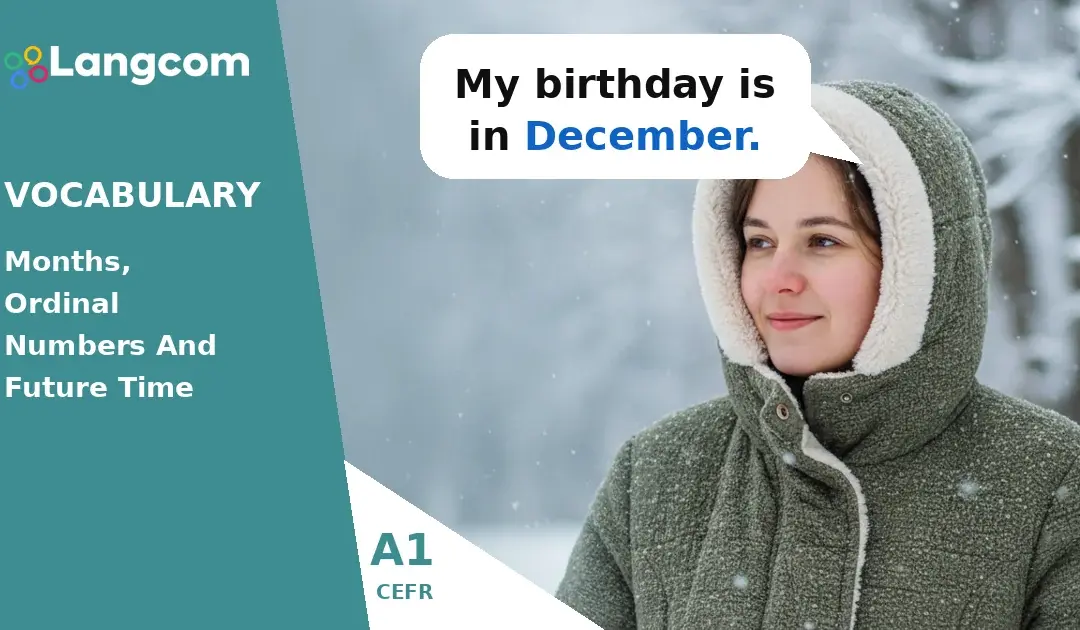
To talk about when things happen in English, you need to know the months of the year, how to use ordinal numbers for dates, and common expressions for the future. These words and phrases help you make plans and understand schedules. For example, you can say My...

by Raúl | Jul 19, 2026 | A1 Beginner English
We use be going to to talk about future plans and predictions. This grammar structure helps you express what you intend to do or what you think will happen very soon. It’s for things you have already decided or for things you see happening based on present...

by Raúl | Jul 19, 2026 | A1 Beginner English
To ask questions in the present simple, we use the helping verbs do or does at the beginning of the sentence. We use do for subjects like I, you, we, and they. For subjects like he, she, and it, we use does. After do or does and the subject, the main verb always stays...
by Raúl | Jul 19, 2026 | A1 Beginner English
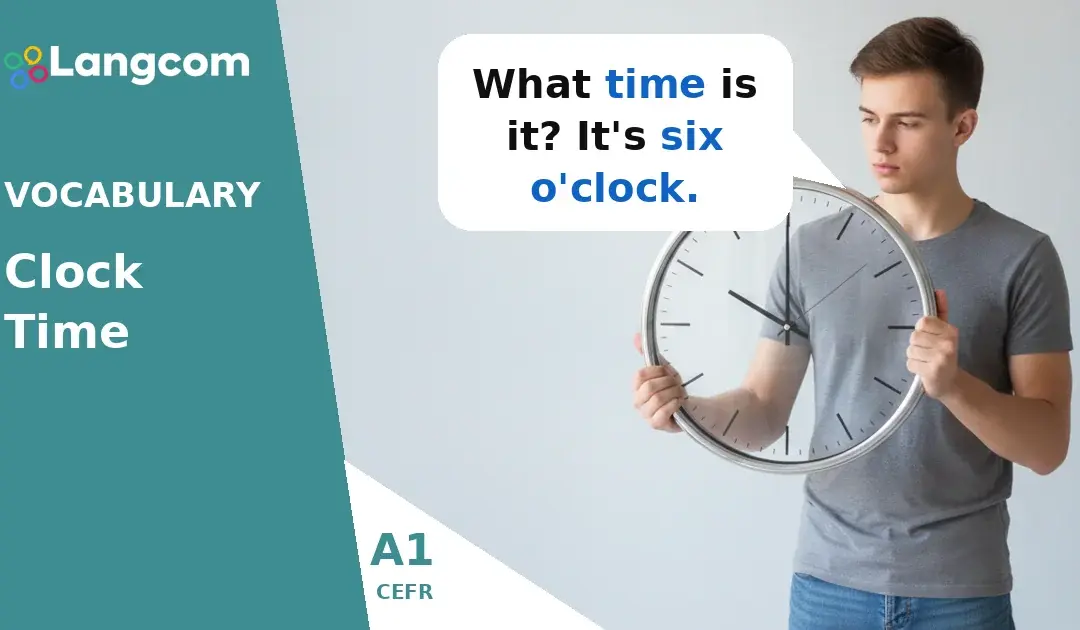
To tell time in English, you can use two main ways: the ‘past/to’ method or the simpler ‘digital’ method. The ‘past/to’ method uses words like past for minutes after the hour and to for minutes before the hour. For example,...

by Raúl Maguiña | Jul 18, 2026 | B1 Intermediate English
Authorities in Huaraz have launched a series of surprise inspections at local internet cafes to ensure that students are safe and following school attendance rules. In the heart of the Ancash region, the city of Huaraz is known for its active student population. Many...
